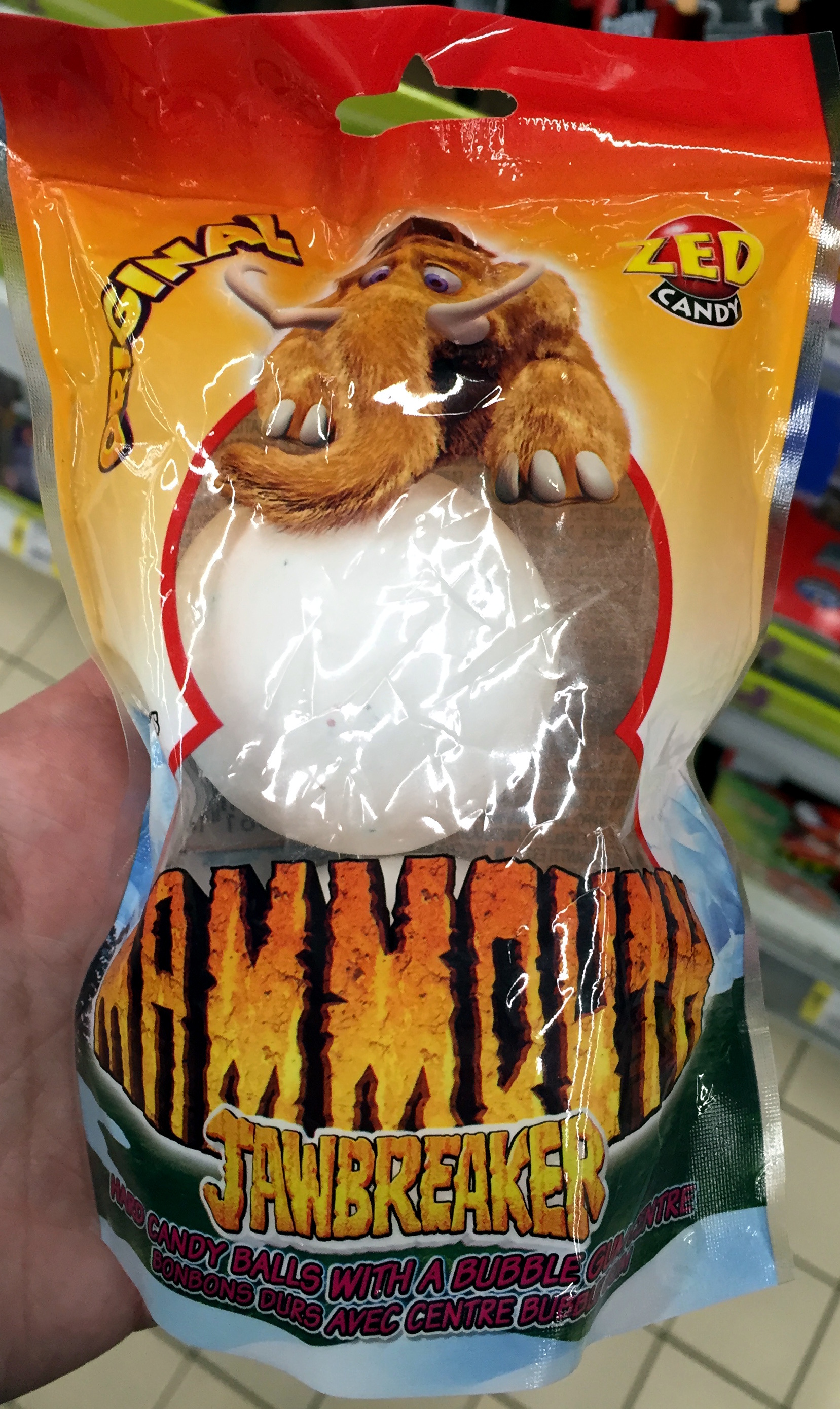
Is Original Mammouth Jawbreaker Safe? Ingredient Analysis
Zed Candy
This page reviews Original Mammouth Jawbreaker by Zed Candy as a dessert. Its current score is 30/100, suggesting that it has several flagged ingredients and may not suit cautious buyers.
If you want the short version, start with these flagged ingredients: Flavors, E101, E120.
30 / 100
Why score is 30
The ingredient analysis reveals multiple synthetic additives, including E120 (cochineal) and E171 (titanium dioxide), which raise significant quality concerns. The presence of artificial colorants and sweeteners further indicates a highly processed composition.
Main concern
Presence of E120, a synthetic colorant derived from insects, raises ethical concerns.
Why it matters: This ingredient is flagged in our analysis based on regulatory and scientific sources. Check the Ingredients section for details and see Data sources for methodology.
Regulation status: Ingredient safety is assessed from EU/EPA/CIR and similar databases; formulations may vary. Always read the product label.
Pros
- Contains dextrose, a simple sugar that provides quick energy.
- Includes citric acid, which adds tartness and can enhance flavor.
Concerns
- Presence of E120, a synthetic colorant derived from insects, raises ethical concerns.
- E171 (titanium dioxide) is a controversial additive linked to potential health risks.
- Multiple artificial colorants (E101, E133, E141) indicate a highly processed product.
- Includes E321 (BHT), a synthetic antioxidant with safety concerns.
Ingredients breakdown
The ingredient notes below are written to explain what each ingredient does in this dessert and why it matters.
-
Is Dextrose safe in this dessert?
Medium
Dextrose is used here as sweetener. Dextrose is a simple sugar used for sweetness and energy. While it provides quick energy, its high presence indicates a sugary composition.
Role in formula: sweetener
Original: Dextrose
-
Is Sucrose safe in this dessert?
Medium
Sucrose is used here as sweetener. Sucrose is a common sugar that adds sweetness. Its inclusion contributes to the overall sugar content, raising concerns about excessive sweetness.
Role in formula: sweetener
Original: sucre
-
Is Gum Base safe in this dessert?
Medium
Gum Base is used here as base. Gum base is a synthetic mixture used to provide chewiness. Its processed nature raises questions about quality and safety.
Role in formula: base
Original: gomme base
-
Is Glucose Syrup safe in this dessert?
Medium
Glucose Syrup is used here as sweetener. Glucose syrup is a processed sugar that enhances sweetness and texture. Its high sugar content raises concerns about health implications.
Role in formula: sweetener
Original: sirop de glucose
-
Is Citric Acid safe in this dessert?
Good
Citric Acid is used here as acidulant. Citric acid is a natural acid that adds tartness and acts as a preservative. It is generally recognized as safe and enhances flavor.
Role in formula: acidulant
Original: acide citrique
-
Is Flavors safe in this dessert?
Bad
Flavors is used here as flavor. Flavors are often synthetic and can include various chemicals. Their vague nature raises concerns about quality and safety.
Role in formula: flavor
Original: arômes
-
Is E101 safe in this dessert?
Bad
E101 is used here as colorant. E101 is a synthetic colorant that may raise safety concerns due to its artificial nature. Its presence indicates a processed product.
Role in formula: colorant
Original: E101
-
Is E120 safe in this dessert?
Bad
E120 is used here as colorant. E120 is derived from cochineal insects and raises ethical concerns. Its use in food products is controversial.
Role in formula: colorant
Original: E120
-
Is E133 safe in this dessert?
Bad
E133 is used here as colorant. E133 is a synthetic colorant that can cause allergic reactions in some individuals. Its presence indicates a highly processed product.
Role in formula: colorant
Original: E133
-
Is E141 safe in this dessert?
Bad
E141 is used here as colorant. E141 is a synthetic colorant that may raise safety concerns due to its artificial nature. Its use indicates a processed composition.
Role in formula: colorant
Original: E141
-
Is E160a safe in this dessert?
Bad
E160a is used here as colorant. E160a is a natural colorant but can be derived from synthetic sources. Its presence raises questions about the product's quality.
Role in formula: colorant
Original: E160a
-
Is E171 safe in this dessert?
Bad
E171 is used here as colorant. E171 (titanium dioxide) is a controversial additive linked to potential health risks. Its inclusion raises significant safety concerns.
Role in formula: colorant
Original: E171
-
Is E904 safe in this dessert?
Bad
E904 is used here as coating agent. E904 is a synthetic coating agent that can raise concerns about its safety and quality. Its presence indicates a processed product.
Role in formula: coating agent
Original: E904
-
Is E321 safe in this dessert?
Bad
E321 is used here as antioxidant. E321 (BHT) is a synthetic antioxidant that has been linked to potential health risks. Its presence raises concerns about product safety.
Role in formula: antioxidant
Original: antioxygène E321
How we score
Our safety scores and ingredient breakdowns are based on regulatory and scientific sources. See Data sources & methodology and How Zerotox works for full details.
Product info
Product ID: 3935627
More from this brand: Zed Candy products in Zerotox
Similar products: dessert in Zerotox database
Report / complain: You may report errors or complain about this product or its formulation to hello [at] zeroto.app . Published for transparency.